
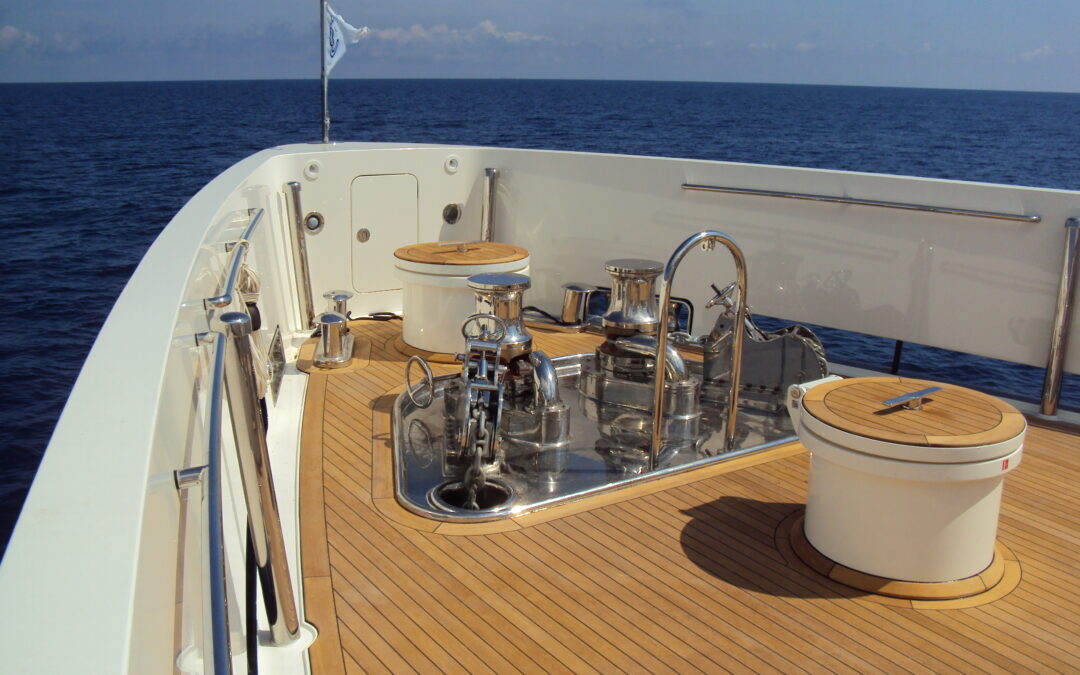
Vertical or horizontal windlass? A Technical guide to choosing
Technical criteria, calculation formula, and installation requirements to help you choose the windlass best suited for your boat — from the Italwinch MZ Electronic line .
INTRODUCTION
Choosing the right windlass isn't a decision to be made on a whim. There are several factors to consider—the boat's length, the weight of the mooring line, the available space at the bow, and the type of sailing—and the wrong choice can have negative consequences in terms of performance, maintenance, and safety on board.
The first distinction to make is between two main types: the vertical windlass and the horizontal windlass. Both serve the same purpose, but they do so in different ways and are suited to different situations.
PRELIMINARY INFORMATION
WHAT TO KNOW BEFORE CHOOSING
Before evaluating any model, you need to have a clear understanding of the following information:
- Length of the boat
- Total weight of anchor and chain
- Type of power supply available on board (12V, 24V, 230V, 400V, or hydraulic)
- Deck Features and Available Storage Space in the Lockers
- Type of boat use
Without this information, any decision is likely to be based on guesswork.
HOW TO MEASURE POWER
HOW TO CALCULATE THE REQUIRED POWER
The two key factors are the boat's length —which determines the size of the winch—and the total weight of the mooring (anchor plus chain), which determines the required power.
In the technical data sheets, you will always find two distinct values:
- Maximum instantaneous pull — the peak load that the winch can withstand for a limited period of time. This is typically reached when the anchor needs to be pulled free from the seabed.
- Lifting capacity — the load that the winch can continuously support during normal recovery operations.
The formula:
Total mooring weight × 4 ≤ maximum instantaneous pull of the winch
Multiplying the total weight of the mooring by 4 yields the minimum instantaneous pull that the anchor winch must be able to provide.
VERTICAL OR HORIZONTAL
Vertical or horizontal windlass? The technical differences
The choice depends mainly on the available space above and below deck.
horizontal windlass
The barbotin rotates on a horizontal axis, and the winch is located entirely on deck. It takes up more space on deck but does not require any below-deck space for the motor unit—ideal when storage space is limited or nonexistent. It is easier to install and maintain on your own.
Vertical windlass
It consists of two parts: the above-deck sprocket and the below-deck motor-gear unit. The deck footprint is minimal. The main technical advantage is the chain’s greater grip: the vertical sprocket engages more links simultaneously than a horizontal one, ensuring a more secure grip and more efficient retrieval.
Comparison: Vertical vs. Horizontal Salpa
INSTALLATION REQUIREMENTS
Once you've determined the power, power source, and model, you need to check the dimensions of the storage compartment to:
- Calculate the amount of chain (or chain-rope) that can be loaded onto the vessel
- For vertical installation, verify the physical space available for the gearmotor assembly
An often-overlooked detail: the distance between the guide hole and the coiled chain must not be less than 40 cm (16"). Adhering to this measurement ensures proper chain coiling and prevents jams during retrieval.
FAQ
What factors should you consider when choosing an anchor windlass?
The main factors are: the boat’s length and displacement, the total weight of the anchor and chain, the type of power supply available on board (12V, 24V, 230V, 400V, or hydraulic), available space on deck and in the locker, and the intended use of the boat.
Is a vertical or horizontal release better?
It depends on the available space. The horizontal model is entirely above deck—ideal when storage space is limited. The vertical model takes up minimal space on deck but requires space below deck for the gearmotor, and provides superior chain grip thanks to the sprocket, which engages multiple links at once.
How do you determine the required power?
Multiply the total weight of the mooring system (anchor + chain) by 4. The result is the minimum instantaneous pulling force that the winch must provide. MZ Electronic technicians are available to assist with custom sizing.
What are the best materials for a anchor?
For marine environments, anodized Anticorodal aluminum is the best choice—it is lightweight, corrosion-resistant, and long-lasting. It is the material used in MZ Electronic’s Italwinch line.
Is it possible to install an anchor windlass on your own?
The horizontal transom mount is suitable for self-installation by those familiar with onboard systems. For the vertical mount, it is recommended to consult a shipyard or a specialized technician. MZ Electronic provides technical data sheets and complete documentation for both types.
What is maximum instantaneous power?
This is the peak load that the winch can withstand for a limited period of time—typically when the anchor needs to be dislodged from the seabed. It should be distinguished from the working load when lifting, which refers to the load that can be sustained continuously.
What is the required distance between the hawse hole and the accumulated chain?
The distance between the hawse hole and the chain accumulated in the hopper must not be less than 40 cm (16") to ensure proper accumulation and prevent jams.
Do you need help making a choice?
Not sure which windlass is right for your boat?
The MZ Electronic technical team is available to provide personalized consultation.